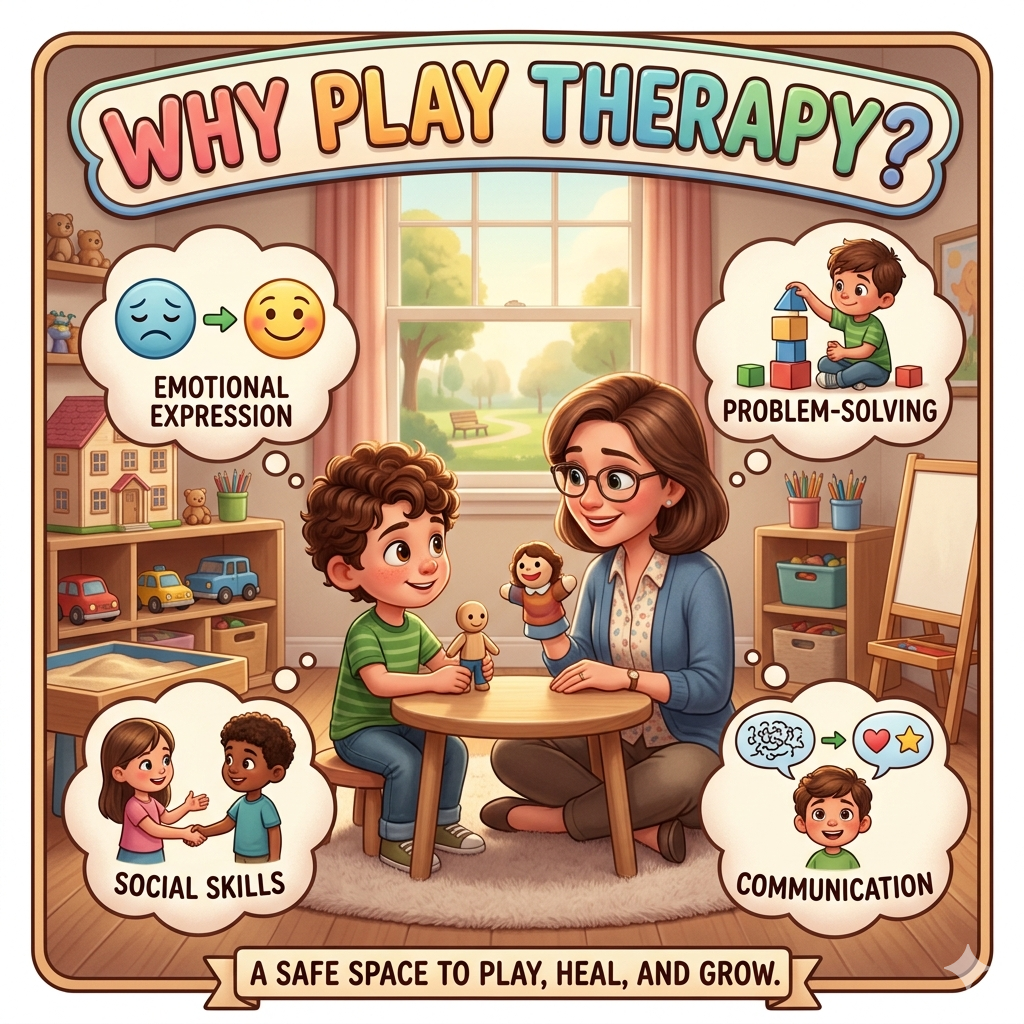
Christina Russell shares the rationale for Play Therapy
Allowing ourselves to play, be spontaneous and creative, or playfully enjoy experiences can be fun and help reduce stress. When engaging with the thinking mind, play can boost a curious and flexible mindset.
Play therapy is a form of psychotherapy for children to experience shared attention (thinking together with an objective therapist). For a child to use play to make sense of their thoughts, feelings and experiences, they need to feel safe. Imagine play therapy is the bridge between the child’s internal resources and their experiences in the world. When the child feels safe to walk on the bridge, the most profound learning and growth happens.
What matters more in a therapy session is not the activities, the toys, or what is produced at the end of a session, but the playful interaction between the child and the therapist.
Have you seen an infant play? They smile and gurgle at their caregiver’s animated voice and facial expression. The caregiver gives a bigger response, and the infant shrieks louder just to get a bigger response. In shared attention and warmth, playful interactions stimulate social engagement and brain development. The infant learns about trust and sense of felt-safety.
I conducted a study on parent-child interactions in play and found that the more parents interact warmly and pay attention to their child when playing (joint attention and shared enjoyment), the more the child learns to be a flexible thinker. A warm and attentive parent would naturally explain things and help their child to understanding what is going on.
in a state of "emotional arousal" but also feel "safe."
This is co-regulation.
wiring" the child’s brain to believe that challenges can be overcome through connection and thought.
So when is the right time to engage in play therapy? There are typically three factors to consider: the child’s internal resources, what’s happening in the child’s world, and the parents’ capacity to help make sense of the more difficult thoughts, feelings or experiences.
What’s happening in the child’s world can be an isolated event, a period of difficult time, or on-going challenges. When a child lacks skills or strengths (e.g. emotion regulation) to cope with the experiences, parents can come alongside to empathise, support, or problem-solve with them. Sometimes, the gap between the child’s skills and the parents’ capacity can be too large; no matter how much parents try to help, there is just very little improvement. That’s the right time to seek professional help.
How to measure progress and growth during therapy?

